Whitney Spencer is a digital project lead and creative strategist with experience guiding complex creative work from concept through execution. Her practice spans digital platforms, branding, and content initiatives, with a focus on building thoughtful systems that support both creative expression and organizational growth.
She is deeply collaborative by nature, working closely with designers, developers, and partners to bring clarity to ambitious ideas and translate them into structured, actionable plans. Whitney brings a steady, detail-oriented approach to managing timelines, resources, and expectations—creating the conditions for teams to do their best work without losing momentum or purpose.
Grounded in communication and storytelling, her work centers on creating intentional, user-centered solutions that are both impactful and sustainable. She is especially drawn to mission-driven organizations and projects where creativity, strategy, and care intersect.
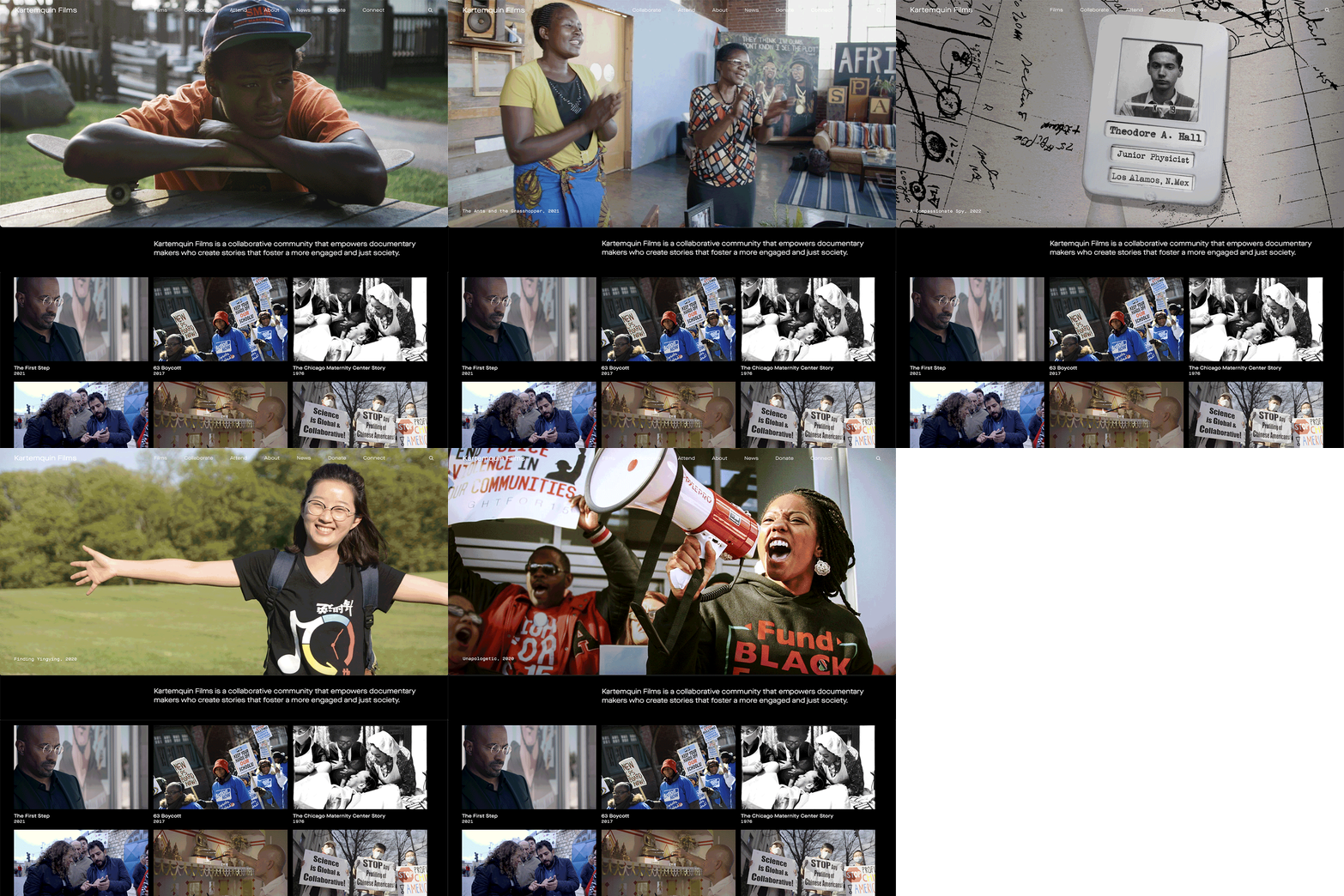
A strategic digital home for over 50 years of documentary legacy.
PROJECT
2021 -2022
KARTEMQUIN FILMS
WEB REDESIGN + DIGITAL CATALOG
TIMELINE
JAN 2022 – APR 2023
ROLE
PROJECT LEAD
DIGITAL STRATEGY
CREATIVE STRATEGY
VIEW THE PROJECT
KARTEMQUIN FILMS WEBSITE + DIGITAL CATALOG
[THE STORY]
Kartemquin’s legacy spans decades of impactful films that have shaped documentary culture and social discourse, from Hoop Dreams to Finding Yingying, pushing the boundaries of vérité storytelling.
At Kartemquin Films, one of the most respected documentary organizations in the U.S., I led the end-to-end redesign of the organization’s website and its first comprehensive digital catalog—a project that reimagined how audiences discover, engage with, and connect to Kartemquin’s extraordinary body of work.
[THE CHALLENGE]
The organization needed a digital platform that could reflect the depth and breadth of its catalog while serving multiple audiences—from filmmakers and partners to educators and documentary fans. Earlier digital experiences were fragmented, limiting film discoverability and audience engagement. The challenge was twofold:
Honor a nearly 60-year legacy without freezing it in time
Design a system flexible enough to support new films, audiences, and modes of engagement
This project represented a pivotal moment to translate Kartemquin’s values—craft, collaboration, and social relevance—into a digital experience that could grow alongside the organization and invite deeper, sustained engagement with its work.
[THE OPPORTUNITY]
Kartemquin Films holds one of the most influential documentary legacies in American cinema, with decades of work that has shaped both the form and the social impact of nonfiction storytelling. Yet that legacy lived across fragmented pages, outdated structures, and disconnected campaign sites—making it difficult for audiences, educators, and partners to fully explore the scope of Kartemquin’s work.
The opportunity was to reimagine Kartemquin’s digital presence as a unified, future-facing platform—one that could serve as both an archive and an active storytelling tool. This meant moving beyond a traditional website refresh toward a refreshed digital experience designed to surface films, programs, and impact work in a way that felt intuitive, discoverable, and mission-aligned.
[THE SOLUTION]
The outcome was Kartemquin’s first all-encompassing digital catalog—a restructured website that serves as both an accessible archive and an active storytelling platform. The redesigned experience:
Centralized Kartemquin’s filmography into a cohesive, searchable catalog
Introduced clearer pathways for users to explore films by theme, era, program, and impact
Balanced institutional storytelling with individual film narratives, allowing each project to stand on its own while reinforcing the larger mission
Delivered a responsive, user-centered experience designed to scale as new films and initiatives are added
Beyond the interface, the solution established a durable system—one that gives Kartemquin a flexible digital foundation rather than a static site frozen in time.
[THE APPROACH]
The project began with alignment: understanding Kartemquin’s mission, audiences, and internal realities while identifying where the existing digital experience created friction rather than access.
I approached the redesign as a platform problem, not a page problem—focusing first on structure, discoverability, and long-term flexibility before visual execution.
Key components of the approach:
Audience and stakeholder mapping to account for filmmakers, educators, funders, press, and general audiences
Content and catalog audit to assess how films, programs, and campaigns were represented—and where gaps existed
Information architecture and taxonomy development to support intuitive browsing across decades of work
Cross-functional collaboration with creative, technical, archival, and communications teams to balance ambition with feasibility
Throughout the process, I emphasized clarity: making complex histories legible, ensuring decisions were mission-aligned, and translating strategic intent into actionable requirements for design and development.
[IMPACT]
The redesigned Kartemquin website and digital catalog significantly improved how audiences access, navigate, and understand the organization’s body of work—transforming a fragmented digital presence into a coherent, scalable platform.
Post-launch Impact Metrics Showed:
Improved discoverability of archival titles, with organic search traffic to non-flagship films increasing 10% as older and lesser-known works became easier to find through structured catalog pathways
Increased depth of engagement, with users spending 40% more time exploring film pages and navigating across related works rather than exiting after a single page
Clearer audience pathways for educators, partners, and funders, reflected in a 25% decrease in time-to-first-click, reducing friction in how different stakeholders accessed relevant content
Operational efficiency gains, including the elimination of manual page creation through film-specific templates and the removal of dependency on external developer management—resulting in $7,000 in annual cost savings